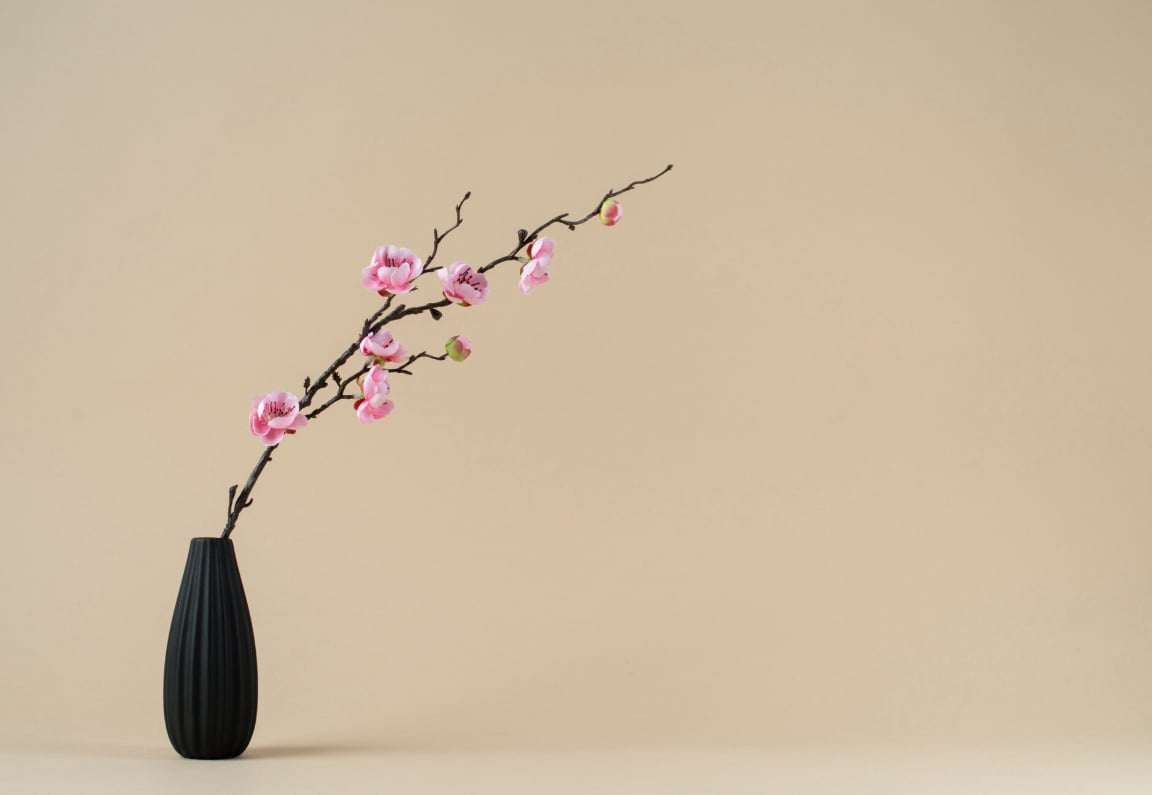
Ikebana and Tea: A Dialogue of Silence
In a traditional Japanese tearoom, the tokonoma — a small, raised alcove — serves as the spiritual heart of the space. Here, the host places two essential objects: a hanging scroll (often bearing a Zen phrase or a seasonal painting) and a simple ikebana arrangement. Unlike large, showy floral displays, the chabana (tea flowers) follow a philosophy of extreme restraint. The host selects only a few stems or blossoms that reflect the exact moment — a single wildflower, a budding branch, or a few fallen leaves — and places them loosely in a bamboo or rustic ceramic container, as if nature had arranged them by accident.
The dialogue between ikebana and the tea ceremony is one of mutual respect and shared aesthetics. Guests entering the tearoom first pause before the tokonoma to bow and appreciate the flowers. This silent greeting establishes the mood for the entire gathering. Only after acknowledging the ikebana do guests turn their attention to the hearth and the tea utensils. This sequential act trains the eye to notice fleeting beauty: the slight bend of a grass stem, the way morning dew might glisten on a petal, the quiet tension between the vase's roughness and the flower's delicacy.
The host's movements during the tea ceremony mirror the deliberate placement of each ikebana branch. Scooping powdered matcha with a bamboo ladle (chashaku), pouring hot water from an iron kettle, and whisking the tea into a froth — every gesture is continuous, flowing, and intentional. There are no wasted motions, just as there are no superfluous stems in a chabana arrangement. The host wears a subdued kimono, often in earthy browns, greys, or deep blues, without bright patterns that might distract the guests' eyes from the flowers or the bowl.
The aesthetic philosophy uniting both arts is wabi-sabi — the celebration of imperfection, impermanence, and the incomplete. In ikebana, a cracked vase, a slightly wilted leaf, or an asymmetrical branch are not flaws but essential expressions of authenticity. In the tea ceremony, a rustic raku bowl with an uneven glaze, a scratch on a cast-iron kettle, or the irregular sound of boiling water (sometimes described as "singing in the mist") are all treasured. Both arts reject the Western ideal of perfect symmetry and polished shine, finding deeper beauty in what time and nature have touched.
Calligraphy's influence appears quietly in both practices. The way a tea host handles the bamboo whisk (chasen) resembles the grip of a calligraphy brush — upright, relaxed, and responsive to subtle pressure changes. The deliberate pause between pouring water and whisking mirrors the breath between brushstrokes. Similarly, the arrangement of ikebana follows the same principles of line, balance, and empty space (ma) that govern a well-composed character. Even the kimono worn during these ceremonies echoes calligraphic elegance: the clean vertical lines of the garment, the crisp fold of the collar, the sharp angle of the obi knot.
Neither ikebana nor the tea ceremony promises profit, status, or rapid self-improvement. Instead, they offer something rarer in the modern world: moments of quiet alignment with nature, tradition, and one's own breath. A guest who notices how a single camellia floats in a ceramic bowl may also notice, later that day, the way evening light falls across a wooden floor. A host who bows before the tokonoma learns humility before creation. Together, ikebana and tea form a dialogue of silence — a conversation without words, where flowers speak, steam rises, and for a few precious moments, the restless mind comes to rest.